
The discussion around no code, AI, and developers gets dramatic very quickly. Every time a new tool becomes powerful, people start saying developers are finished. I have seen this kind of talk again and again. First it was website builders. Then no code. Now AI. And every time, the same fear comes back that developers are going to disappear. Personally, I do not see it that way at all.
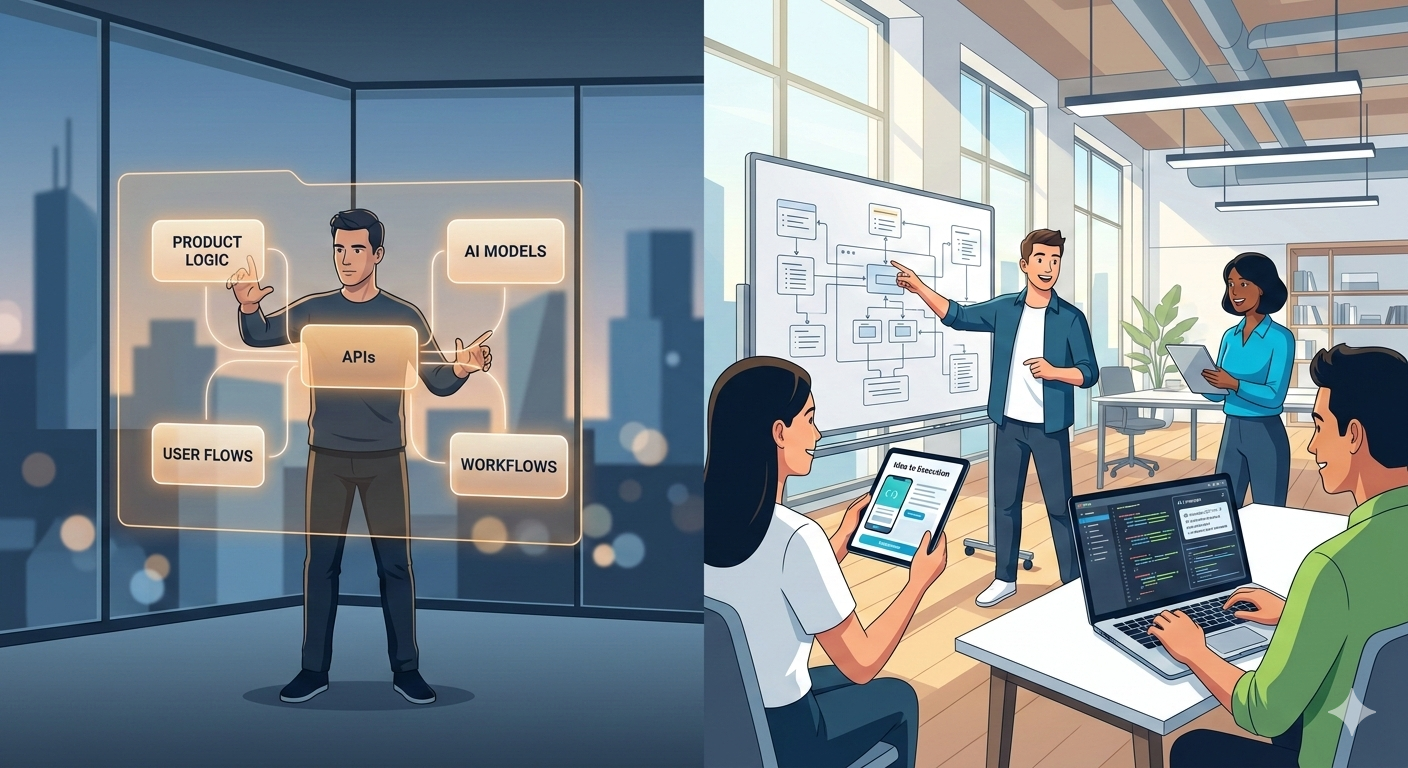
I think what is actually happening is much simpler. The role of the developer is changing, not disappearing. Tools are getting better. Abstractions are getting stronger. The amount of repetitive work is reducing. And that naturally changes what the human focuses on. But that does not mean the human becomes useless. It just means the human has to move up the ladder and work at a higher level.
That is why I like this topic so much. It is not really about asking whether AI or no code will replace developers. The better question is what kind of developer will matter most in the future. And I think the answer is clear. The future belongs to developers who understand systems, products, logic, workflows, quality, and user needs, not just syntax.
No Code and AI Are Tools, Not Endpoints
I see no code and AI the same way I see any strong tool. They give leverage. They remove friction. They make some things easier. They open the door for more people to build simple things. And that is actually a good thing. More people experimenting means more ideas, more products, and more innovation.
But at the same time, that does not mean everything can now be built perfectly without real engineering. Simple workflows, simple websites, simple prototypes, and simple apps can become easier to make with these tools. That is great. But once products become serious, once they need to scale, once they need strong architecture, performance, security, integrations, and reliability, experienced developers still matter a lot.
A lot of people forget that building the first version of something is only one part of the story. Maintaining it is another story. Scaling it is another story. Making it secure is another story. Making it feel polished is another story. Tools can help with all of that, but the deeper thinking still needs people who know what they are doing.
"The future does not belong to people who ignore new tools. It belongs to people who know how to use them without losing their own thinking."
The Developer of the Future Will Be Different
I really think the developer of the future will look very different from the developer of the past. Earlier, a huge part of the job was manually coding everything from scratch and spending a lot of time on lower level implementation details. That is slowly changing. The developer of the future is going to spend more time directing systems, connecting tools, validating outputs, and designing good product flows.
Prompting AI properly is going to matter. Understanding where AI fails is going to matter. Knowing how to review generated code is going to matter. Knowing how to combine APIs, tools, automations, models, databases, and interfaces into one clean system is going to matter. In short, the job becomes broader. Less about only writing code, more about orchestrating outcomes.
I also think product sense is going to become more valuable. When more people can generate code, then pure code generation becomes less special by itself. What becomes more special is knowing what should be built, what should be kept simple, what users actually need, and how to shape the whole experience properly. Taste matters. Structure matters. Clear thinking matters.
So I do not think the future developer is just a coder. I think the future developer is part builder, part architect, part problem solver, part tool operator, and part systems thinker. Someone who can move between product vision and technical execution. Someone who can use powerful tools without becoming dependent on them blindly.
Developers Who Adapt Will Become More Powerful
What excites me about this future is not fear, it is leverage. A good developer today can do much more than before. Small teams can build faster. Solo builders can launch faster. Founders can prototype quickly. Students can test ideas faster than older generations ever could. That is a huge shift.
Instead of spending all their time on repetitive setup and slow iteration, developers can now focus more on refining the product, improving the user experience, and shipping faster. That means the gap between idea and execution becomes smaller. And that is one of the best things technology can do.
But again, that power only helps the people who adapt. Developers who stay stuck in the mindset that this is how things have always been done are probably going to struggle. The market rewards relevance. If the workflow changes and you refuse to change with it, then naturally you lose your edge.
To me, that is the real message of the future. Not that developers are ending, but that the standard is rising. Just knowing basic implementation may not be enough anymore. You have to think bigger. You have to understand systems. You have to learn how to move with modern tools instead of pretending they do not matter.
I also think there will always be levels to this. Some people will use no code and AI to build simple solutions. Some will use them to prototype. Some will use them as support. And strong developers will use them to build better, faster, and smarter while still keeping quality high. That is why I never see this as an either or situation. It is not developers versus AI. It is developers with AI versus developers without AI.
So when I think about the future of no code, AI, and developers, I do not feel worried. I feel challenged in a good way. It pushes me to keep upgrading, keep learning, and keep thinking bigger. The future is not removing developers. It is reshaping the role. And the people who accept that early are going to have a big advantage.